
Truck Inspection Checklist
Truck inspections can provide a wealth of relevant information for the driver and the organization responsible for shipping whatever freight might be present aboard the truck. In some cases, like for truckers and other vehicle operators with a commercial driver’s license (CDL), regulatory compliance requires a pre-trip inspection checklist to ensure both the driver’s safety and the security of the goods. It can be vitally important to ensure that the vehicle is functioning properly to avoid injury to the driver or other motorists and to preserve the integrity of the shipped goods.
A truck inspection checklist covers almost everything a driver needs to inspect before embarking on a lengthy journey. From the front of the truck and the engine compartment to the rear of the trailer – numerous items need to be inspected to ensure proper functionality. A daily truck inspection checklist PDF might have all the necessary items, but memorizing checklist items and making the checklist inspections an integral part of shipping routine preparations can be quite taxing.
Essential Elements of a Pre-Trip Inspection for Truck Drivers
At the front end of the truck, the driver must inspect the integrity of the engine compartment as well as the necessary fluids (oil, coolant, power steering, etc.), hose, and pump connections, and drivers must also ensure that belts are properly mounted and do not have any signs of extreme wear like cracks or frayed edges. Drivers must also inspect the front suspension, including the spring mounts/hangers, shock absorbers, and airbag(s) – there shouldn’t be any leaks, abrasions, or other visible signs of damage or wear.
Additionally, drivers are responsible for ensuring that mirrors and brackets are all secured and visible from the driver’s seat. The steps, door, and hinges must all be sturdily mounted and secure enough to seal properly. Similarly, the fuel tank should remain intact with the cap and seal still attached and functional.
Towards the rear of the vehicle and trailer, drivers must inspect the frame, drive shaft, exhaust, mudflaps, and catwalks. At the coupling area, drivers must ensure that the air connector is secure and that cables are not dragging or tangled. Mounting bolts are all present and tight, the skid plate must be sufficiently greased, and the locking jaw and kingpin must be mounted and secure. Additionally, drivers must inspect the brakes, wheels, tires, and wheel rims to reduce the possibility of a flat or blowout.
There are also inspection points for the trailer and inside the cab, so the inspector assesses a lot of information during a pre-trip inspection. But instead of attempting to memorize a truck inspection report, drivers can utilize a truck inspection checklist app to help ensure that everything is as it should be.
Drivers could also search for a post-trip inspection checklist PDF to double-check items once the trip has been completed to determine any damages or wear that might have occurred in transit. CDL manuals and company documents may also provide additional information about the thoroughness of inspections.
DOT Truck Inspection Checklist
Like a CDL checklist, a Department of Transportation (DOT) truck inspection checklist can help ensure that compliance regulations are satisfied and that the vehicle and its operator can legally operate on public roads. All commercial vehicles weighing over 10,001 pounds must undergo an annual DOT inspection to assess the parts and extent of vehicle wear. There are six different ‘levels’ of DOT inspections – levels 1 through 6 – each serving a unique purpose.
Level 1
The most commonly conducted of these inspections is level 1. Generally, inspectors assess various documents, the health, and well-being of the vehicle operator, in addition to the safety and functionality of the vehicle. These inspections are conducted in person and generally take under an hour to complete.
Level 2
Level 2 inspections are quite similar to level 1 inspections, with the primary difference being that a level 2 inspection does not require the inspector to climb under the vehicle. Because of this, level 2 inspections are generally completed in about 30 minutes.
Level 3
A level 3 inspection involves the assessor checking the driver for all the necessary certifications and proper licenses. Drivers must provide a skill performance evaluation certificate, relevant medical certifications, a valid driver’s license, a record of duty status, and any relevant driver or vehicle inspection reports. Because level 3 inspections are driver-centric, they typically only take about a quarter of an hour to conduct.
Level 4
Level 4 inspections are one-time assessments that help examine a specific item or claim about a vehicle. Because the claims may vary widely, the time to complete a level 4 inspection will also fluctuate depending on unique conditions and variables.
Level 5
These inspections look very similar to level 1 inspections on paper, except that for level 5 inspections, the driver does not need to be present.
Level 6
Finally, level 6 inspections are special examinations for specific radioactive substances. These inspections can take up to an hour or longer, and the driver, cargo, and vehicle must pass each pass inspection before the driver is allowed to depart. After passing a level 6 inspection, the vehicle is given a special nuclear symbol to indicate that the inspection has been passed. Once the driver arrives at the destination and the shipment has been fulfilled, the symbol is no longer valid and is removed.
DOT annual inspection requirements generally include a comprehensive assessment of the driver, relevant credentials, and licenses, as well as the functionality and safety of the vehicle. For more information about DOT inspection forms and stickers, consult a DOT inspection form PDF or a DOT level 1 inspection checklist PDF.
Commercial Vehicle Inspection Software
There are a variety of capabilities enabled by today’s commercial vehicle inspection software. Whether your company needs a vehicle condition report app, a vehicle damage inspection app, or a free fleet inspection app – innumerable software solutions can help modernize your business and potentially help streamline your daily operations.
Technology is one of the driving forces modernizing contemporary trucking and ground shipping enterprises; companies are continually searching for ways to improve their workflow while increasing revenue streams and minimizing safety hazards and potential threats to the company’s longevity. Even as little as a few years ago, vehicle operators were largely expected to use physical, paper maps to navigate a shipment from point A to point B successfully.
Nowadays, organizations have digital check-ins and checklists for drivers to sign off on before embarking on their journeys. Then drivers can utilize a GPS tracker or a specialized route navigation app to optimize their journey and help them arrive as quickly and safely as possible. Some apps can also provide features like crash detection and a mechanic portal to help expedite repairs and regular maintenance.
Organizations can help ensure that their drivers and shipments adhere to compliance and regulations by utilizing commercial vehicle inspection software. Additionally, vehicle inspection software can help a business immediately recognize when a vehicle might have a problem so that a maintenance team can quickly be dispatched to resolve the issue. Improving inspection efficiency also helps to improve efficiency throughout the rest of the process.
Daily Vehicle Inspection App
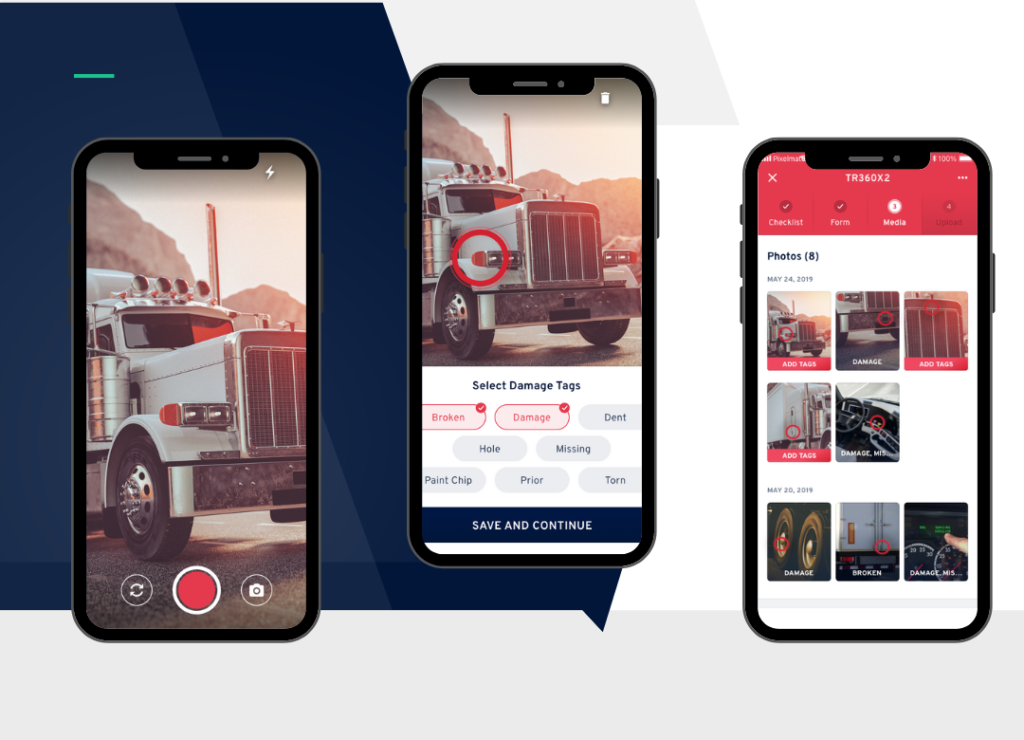
For convenience and transparency, fleet managers and/or business owners may use a daily vehicle inspection app to help streamline checklist inspections and immediately identify an issue so drivers can proceed to their delivery destinations quickly and efficiently. A vehicle inspection app for Android or iOS can be even more useful and user-friendly than a free daily truck inspection checklist.
With a daily vehicle inspection app, you can execute routine inspections quicker while helping improve efficiency throughout the rest of the process. You can also increase visibility using an app or other vehicle inspection software. The software helps companies respond to issues faster and more precisely than traditional analog record-keeping methods.
Vehicle inspection apps can also help improve safety initiatives by identifying real-time issues. This increases efficiency capabilities by helping keep all parties informed. And with improved asset management capabilities, your organization can divert resources more effectively and profitably. A daily vehicle inspection app can provide numerous features for your front line to help improve performance and management at scale.
While there are dozens of resources available online – from free vehicle inspection apps to a DOT daily vehicle inspection form PDF and much more – that can help your business optimize record keeping and inspection initiatives. Companies that can adapt in the digital era and develop ways for technology to help improve their efficiency are setting themselves up for success; there is a fair amount of truth in the adage about working smarter instead of harder. Regarding the menial, time-consuming aspects of running a business, doesn’t develop a centralized, easy-to-use system to help fulfill your organization’s vehicle inspection needs makes sense?
The #1 Inspection App
Used in over 23 million inspections at 2,000 locations nationwide, Record360’s InspectPro is the #1 inspection app in the heavy equipment and truck industry. Enhance customer satisfaction through accurate damage assessments, build trust, and demonstrate commitment to the customer experience.
Request a demo of Record360 and discover why the leading rental companies trust Record360 for their inspections.