See Record360 at Bauma 2025: April 7-13, Munich, Booth C4-719

Truck Rental Inspection

Revolutionizing Truck Safety: The Benefits of Digitizing Pre-Trip Inspections

A truck pre-trip inspection is an inspection of a commercial motor vehicle (CMV) performed by a truck driver before starting a trip. This inspection aims to ensure the truck is safe to operate. A typical checklist includes: checking the brakes, tires, lights, mirrors, steering, suspension, and coupling devices. The driver should confirm all documentation is on board.

Conducting a thorough pre-trip inspection helps reduce accidents and breakdowns. Drivers must document their inspections and any defects found. In many countries, pre-trip inspections are a legal requirement.

Compliance and Truck Pre-Trip Inspections

The Federal Motor Carrier Safety Administration (FMCSA) sets the compliance requirements for truck pre-trip inspections in the United States. These requirements are outlined in the Federal Motor Carrier Safety Regulations (FMCSRs).

Drivers must perform pre-trip inspections to ensure their trucks are safe for transport. Pre-trip inspections help identify potential issues before they start their journey, reducing the risk of accidents on the road.

Truck pre-trip inspections help ensure a truck complies with FMCSA regulations and standards. By performing pre-trip inspections, drivers can be sure they comply with FMCSA requirements. The trucker can drive without worrying about receiving violations from law enforcement. This allows drivers to avoid costly fines and penalties associated with non-compliance.

According to the FMCSRs, drivers must conduct a pre-trip inspection of their commercial motor vehicle (CMV) before starting a trip. The truck pre-trip inspection must cover all the vehicle’s major systems and components, including:

  • Brakes
  • Steering and suspension
  • Tires, wheels, and rims
  • Lights and reflectors
  • Coupling devices
  • Fuel and exhaust systems
  • Electrical systems
  • Mirrors
  • Load securement

Drivers must also check for any fluid leaks and make sure that all the vehicle’s safety equipment is present and in good condition.

The FMCSRs require drivers to document the results of their truck pre-trip inspections, either on paper or electronically. The documentation must include a description of any defects or malfunctions found. Drivers must also document repairs or maintenance performed.

Failure to conduct a proper truck pre-trip inspection and maintain accurate inspection records can result in fines and penalties. The fines and penalties can impact both the driver and the carrier. Additionally, operating a truck with known problems can pose significant safety risks. Hence, drivers must take the pre-trip inspection process seriously and address any issues discovered.

Challenges with Traditional Paper-Based Inspections

Many businesses struggle with paper-based inspections. Using paper can make it difficult to keep track of equipment and be transparent with customers. This can lead to damaged equipment, a hit on reputation, fewer repeat customers, and wasted time. 

To prevent these problems and improve customer relationships, it’s important to have good records of equipment. This means getting rid of paper, building strong customer relationships, and having a reliable, flexible, and compliant system.

Paper-based inspections come with challenges, and relying on manual processes can cause additional problems. Using paper-based vehicle inspections takes time and is prone to errors, which can result in missed inspections or inaccurate records.

The Solution: Digitizing the Truck Pre-Trip Inspection

Digitizing the truck pre-trip inspection process has several benefits over traditional paper-based inspections:

Increased accuracy and reliability

Digital pre-trip inspection forms are becoming popular. They provide an efficient and reliable way to record detailed and accurate records of a vehicle’s condition. With the help of photos and videos, these forms can accurately record the condition of each part of the vehicle before it is used. It also helps to reduce costly repairs due to undetected damages or faulty parts. By using digital pre-trip inspection forms, companies can save time and money. Their vehicles will always be in top condition.

Improved efficiency

Truck drivers can access and retrieve the forms more quickly by digitizing them. This allows them to complete the process faster. This improved efficiency can lead to cost savings in both time and money for trucking companies. 

Digital pre-trip inspection forms also make it easier for companies to track and audit these vehicle inspections.  Companies can make sure they meet all safety regulations. Furthermore, digital forms are easier to store and maintain than paper ones, which can help reduce paperwork clutter in the office.

Enhanced reporting and analysis

This technology allows companies to analyze data from the forms. Companies can then identify trends and track their fleet’s performance. Companies can gain insights into their fleet’s activities with enhanced reporting and analysis.

This allows them to make informed decisions about maintenance needs. Companies can ensure their vehicles are always in top condition for maximum efficiency. It will also help them reduce repairs and other maintenance costs.

Better communication

Digital truck pre-trip inspection forms reduce the risk of miscommunication. They allow more accurate and detailed information to be collected and shared between parties. Drivers can complete their pre-trip inspection without worrying about miscommunication or forgetting important details.

This helps ensure that all trucks are in proper condition before they hit the road, reducing the risk of accidents or other mishaps. Digital truck pre-trip inspection forms improve communication with real-time updates on inspections, repairs, and maintenance activities. This allows for more efficient scheduling of trips and better coordination of resources across many sites.

Enhanced safety

Digital truck pre-trip inspection forms reduce the risk of accidents and breakdowns. With the help of these digital forms, truckers can identify any issues before they start their journey and take steps to mitigate them.

This helps to ensure that their vehicles are safe and roadworthy while they are on the road. It also helps them follow regulations and industry standards, enhancing road safety. Digital pre-trip inspection forms also provide documentation, which can be used in case of any disputes or claims.

Digitizing the truck pre-trip inspection process can help fleet managers and drivers improve their operations’ safety and efficiency. Digital pre-trip inspections reduce the risk of fines and penalties.

Record360 and Truck Pre-trip Inspections

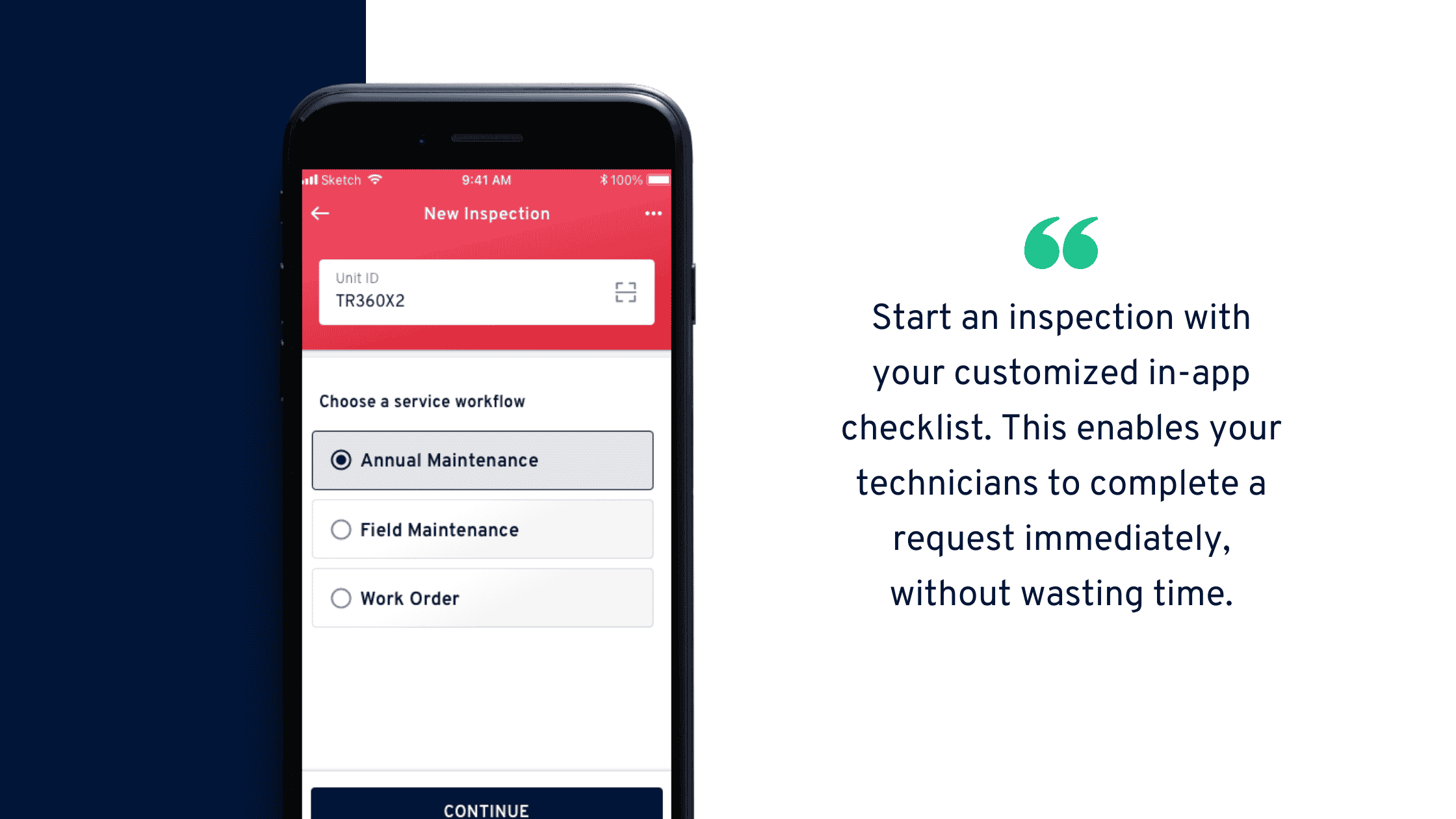
Record360 enables truck drivers and fleet managers to perform pre-trip inspections in a cloud-based platform. Cloud-based technology allows fleet managers to conduct pre-trip inspections remotely. This saves time and money. A cloud-based platform reduces paperwork and streamlines the inspection process.

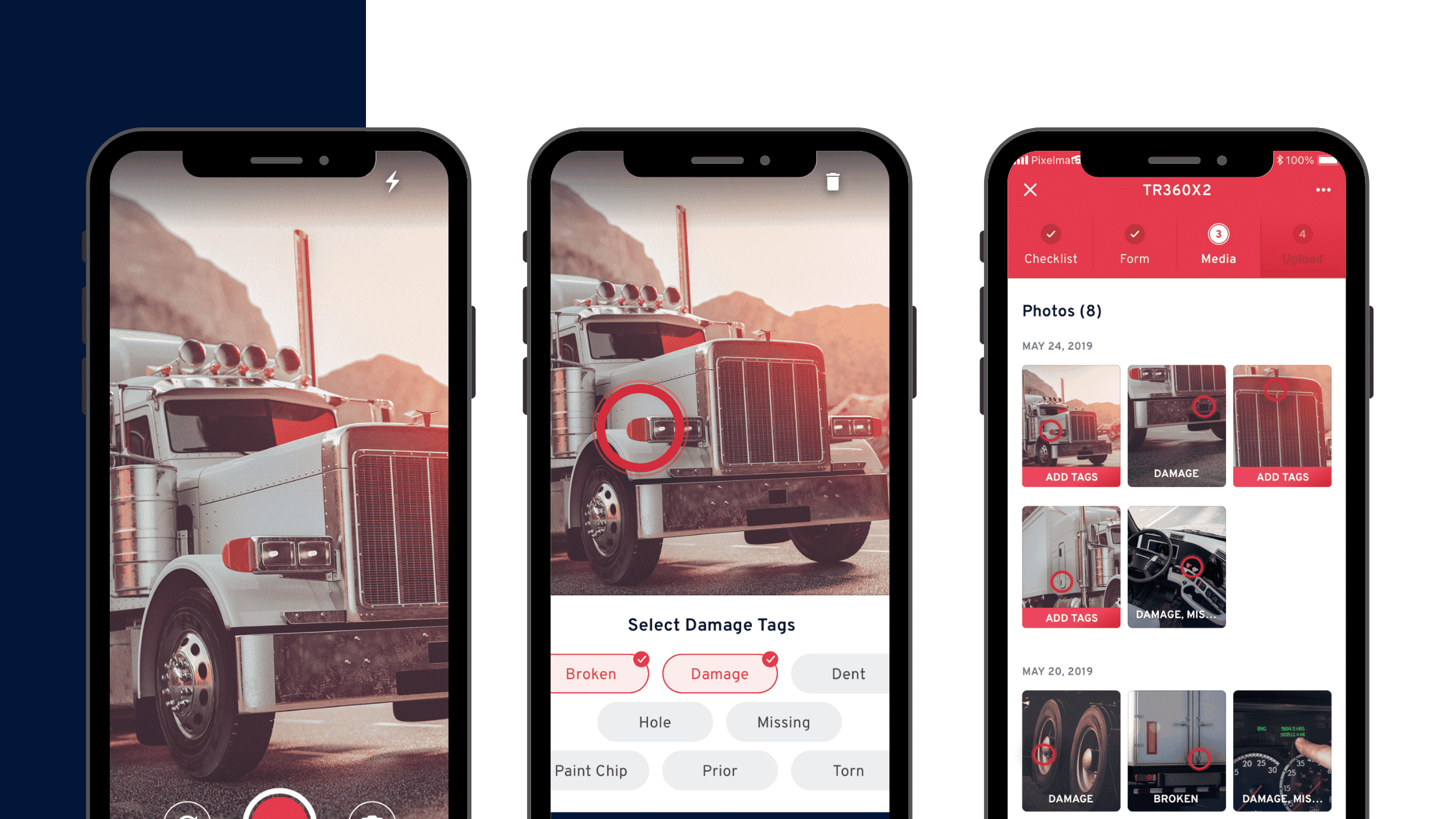
With Record360, truck drivers can capture photos of their vehicles before and after trips. Truck pre-trip inspections are essential to ensuring the safety of truck drivers and other vehicles on the road. Photos and videos taken during these inspections can be used to identify potential issues with a truck before it takes off. They can also help document any repairs.

The truck pre-trip inspection can also provide evidence of an accident or other incident. Companies can ensure their vehicles are safe by using photos and videos for truck pre-trip inspections. Truck pre-trip inspections also ensure trucks are updated with all necessary maintenance. This reduces the risk of accidents, improves driver safety, and saves money in the long run. 

Record360 is an ideal solution for trucking companies looking for a better way to conduct truck pre-trip inspections. Record360 provides GPS tracking, real-time notifications, and customizable checklists, making it easier to manage truck pre-trip inspections. Additionally, the platform’s user interface is intuitive and easy to use.

Ensure Safe and Efficient Trucking with Record360

Transform your pre-trip reporting from paper to digital with Record360. Our cloud-based platform offers a range of benefits, including remote pre-trip inspections, improved documentation, enhanced reporting, and the most user-friendly interface.

Record360 provides GPS tracking, real-time notifications, and customizable checklists, making it easier to manage truck pre-trip inspections. Additionally, the platform’s user interface is intuitive and easy to use.

Request a demo today and discover the benefits of digital inspections!

Streamlining Truck Inspection Checklists with Record360

Checklist For Truck Inspection

If you’ve ever seen a checklist for truck inspection that’s a mile long and groaned, we know how you feel. Truck inspection reports are essential for the rental industry, but that doesn’t mean they’re a joy to fill out or keep track of. It can seem like there are a hundred steps in filling out a truck inspection checklist – especially on paper. While there’s nothing wrong with paper forms per se, it can cost a business a lot of time and money in the long run if they’re losing out on efficiency and attention to detail due to record-keeping issues.

First, knowing what to include in a pre-trip truck inspection checklist can be difficult. While it is a given that certain things are always included, such as fuel level and mileage, what else must be included on the list? How detailed is too detailed, and is there such a thing?

Searching for a pre-trip inspection checklist PDF online might give you a good idea of what other rental companies search for before leasing out their equipment, but that doesn’t mean it’s right for you and your business. You can always create a custom report if the one you find is too detailed or not as detailed as you like. 

However, to protect against damage claims and ensure that you’re always aware of the state of your equipment, it might be better to go with a more thorough or detailed checklist over a basic one. Additionally, checklists might vary from machine to machine. A Department of Transportation (DOT) truck inspection checklist might look different from a simple rental car checklist. Here are a few starting suggestions for most inspection checklists:

Engine & Fuel System Checklist

  • Check the oil in the engine to ensure it is clean and at an appropriate level.
  • Record how much fuel is in the tank before leasing.
  • Inspect exterior gas caps to ensure they are in proper working order.
  • Run the vehicle and listen for strange or unusual noises indicating potential issues.
  • Check the belts and hoses for signs of wear, such as leaks, cracks, or splits.

Vehicle Body

Inspecting the vehicle body and keeping accurate records of its condition is vitally important, especially when renting road vehicles. Having an accurate record of the body’s condition before it is leased gives your guys a reference to check against when the vehicle is returned to your lot. 

Any pre-existing damage to the vehicle must be marked, so keep an eye out for:

  • Dents, dings, and scrapes in the doors
  • Marks possibly made by key scratches or other vandalism
  • Dents, scratches, or dings along the entire body of the vehicle
  • Loose hubcaps, body stripping, or spreading rust

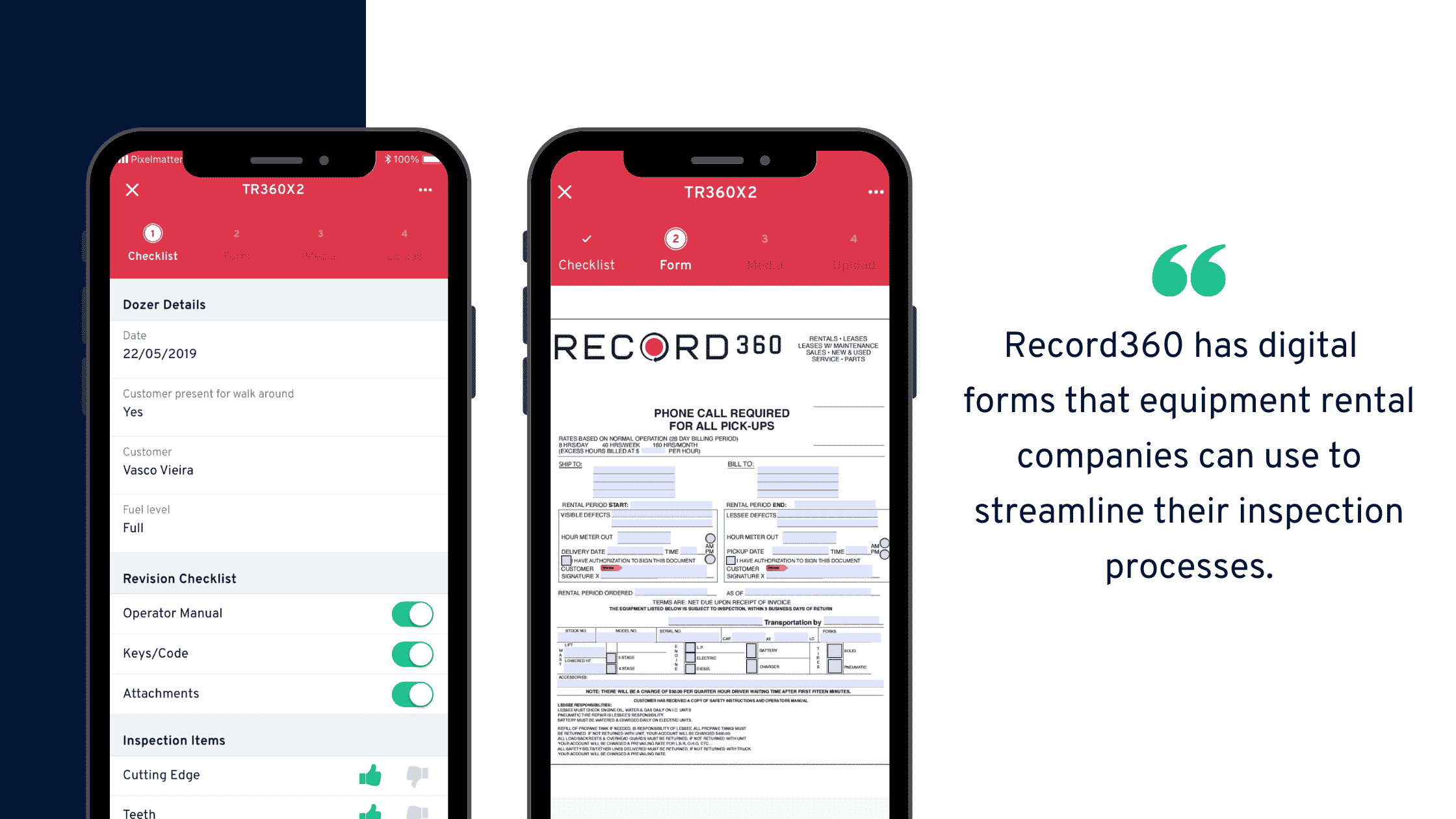
There should also be records of the condition of the lights, cab, windows, internal systems like horn, AC, heat, seatbelts, brake systems, tires, and vehicle documents like registration and proof of insurance. While that does sound like a lot to take care of, there is software that exists to automate your processes and streamline your inspection process. With Record360, you can create custom checklists that are digitally stored and possible to fill out on any smartphone or tablet. Photos and videos can be attached to reports and checklists, so there’s no question of the vehicle’s condition.

Daily Vehicle Inspection Reports 

DVIRs, or daily vehicle inspection reports, are crucial to every driver’s routine. They’re required before, during, and after every trip and serve to ensure the vehicle’s safety and reliability. While they technically don’t have to be documented, it’s best practice to do so, as it provides proof that the inspection was performed.

If there are defects found during the post-trip inspection, they must be documented on the DVIR. This serves as a record of the issue and helps ensure it is addressed promptly. Tracking and resolving maintenance issues can be difficult without proper documentation, leading to more severe problems.

One of the key benefits of electronic DVIRs is ensuring that inspections are being done. Tracking whether or not a particular inspection has been performed with paper records can be difficult. On the other hand, electronic records provide real-time data on when inspections are completed and can even send alerts to fleet managers if an inspection is missed.

In addition to ensuring that inspections are done, electronic DVIRs make assigning tasks to the service department easier. If an issue is identified during an inspection, the electronic record can automatically generate a task for the service department to address the issue. This helps streamline maintenance and ensures issues are addressed quickly and efficiently.

DVIRs are an essential tool for maintaining the safety and integrity of a vehicle. By performing regular inspections and documenting issues, drivers and fleet managers can stay on top of maintenance needs and prevent more significant problems from developing. With proper attention to detail and a commitment to best practices, DVIRs can help keep drivers and their vehicles safe.

DOT Inspection Checklist

Keeping careful and regular inspections and checklists of the conditions of your vehicle year-round can also take some of the pressure off when it comes time for the DOT annual roadside inspection.

Record360 provides a simple way to inspect your vehicles according to the DOT inspection 2022 standard. You could create your template directly in the app rather than search online for a printable DOT annual inspection form. It would be immediately available to all your guys, and you could see the results in real-time. The use of DOT daily vehicle inspection PDF forms and DOT inspection checklist PDFs don’t offer that kind of responsiveness and, more often than not, can still be a pain to fill out and organize.

There are DOT inspection checklists available online to recreate a fillable template from. While the inspection documents or process may vary slightly from year to year, the DOT inspection checklist 2022 most likely includes an inspection of the following:

  • Brake system
  • Electrical system
  • Suspension
  • Wheels and tires, including rim and hub
  • Seat belts
  • Fuel and exhaust systems
  • Headlights, rear lights, turn signals, and other lights
  • Windshield wipers

The above checklist would be similar or appropriate for a Level 1 DOT inspection checklist template. Drivers must also show all necessary documentation to the DOT inspector, including their CDL, driver logs, and medical/skills performance evaluation certificates. Using regular inspections and checklists with Record360 could be one way of preparing drivers or vehicles for annual DOT inspections and minimizing fines or other penalties. Record360 could also be utilized to create checklists and inspections that correspond with every level of the DOT inspection checklists if you so desire. The information recorded with Record360 is kept safe in a cloud-secure system that protects you, your business, and your customers while giving you 24/7 access to your data.

DOT Inspection Forms And Stickers

DOT Level 1 inspection checklist PDFs can be found online and show you everything you need to know if your vehicles or machinery will pass inspection or need additional work. DOT inspection checklist PDFs are available for nearly every level of the inspection, including level 2 inspection checklist PDFs. Knowing the content of these DOT inspection forms and stickers can help prepare your vehicles and drivers for DOT inspection ahead of time.

While it’s good to know the checklist content of these inspections, including DOT daily vehicle inspection form PDFs, depending on the type of vehicles and machinery you rent out, not all forms and fields will apply to your business. Additionally, PDF forms do not offer a lot of versatility or flexibility over paper forms. Most paper forms become PDFs and must be filed and organized in a way that takes nearly as much time and effort as paper forms. Record360 takes the effort out of record-keeping without sacrificing accuracy and detail.

Record360 can keep track of any annual vehicle inspection report. How to fill out these forms is simple and streamlined within the app and easy to pick up and learn without prior technological experience. Record360 can create templates for CVSA level 1 inspection checklists alongside the DOT annual vehicle inspections. The results of these reports and checklists can be accessed and approved in real time from anywhere in the world. Record360 can give you an accurate idea of the condition of your fleet, save money, streamline workflows, verify customers, and more. Transitioning from using annual vehicle inspection form PDFs to Record360 could take only days instead of weeks. The software can eliminate damage disputes and protect customers and leasing agents. When you use detailed inspection checklists that are simple to fill out and keep track of, no one is caught off guard by annual DOT or CVSA vehicle inspections.

Go Digital with Record360

Ready to streamline your truck rental and leasing business and simplify your inspection checklist process? Say goodbye to paper forms and switch to Record360’s digital platform.

Record360 can help you cut costs, streamline inspections, augment inventory management, and protect your assets from damage—all while keeping your customers happy.

Request a demo today and discover the future of truck inspection management with Record360.

Truck Inspection Checklists and Apps for Compliance and Efficiency

Truck Inspection Checklist

Truck inspections can provide a wealth of relevant information for the driver and the organization responsible for shipping whatever freight might be present aboard the truck. In some cases, like for truckers and other vehicle operators with a commercial driver’s license (CDL), regulatory compliance requires a pre-trip inspection checklist to ensure both the driver’s safety and the security of the goods. It can be vitally important to ensure that the vehicle is functioning properly to avoid injury to the driver or other motorists and to preserve the integrity of the shipped goods.

A truck inspection checklist covers almost everything a driver needs to inspect before embarking on a lengthy journey. From the front of the truck and the engine compartment to the rear of the trailer – numerous items need to be inspected to ensure proper functionality. A daily truck inspection checklist PDF might have all the necessary items, but memorizing checklist items and making the checklist inspections an integral part of shipping routine preparations can be quite taxing.

Essential Elements of a Pre-Trip Inspection for Truck Drivers

At the front end of the truck, the driver must inspect the integrity of the engine compartment as well as the necessary fluids (oil, coolant, power steering, etc.), hose, and pump connections, and drivers must also ensure that belts are properly mounted and do not have any signs of extreme wear like cracks or frayed edges. Drivers must also inspect the front suspension, including the spring mounts/hangers, shock absorbers, and airbag(s) – there shouldn’t be any leaks, abrasions, or other visible signs of damage or wear.

Additionally, drivers are responsible for ensuring that mirrors and brackets are all secured and visible from the driver’s seat. The steps, door, and hinges must all be sturdily mounted and secure enough to seal properly. Similarly, the fuel tank should remain intact with the cap and seal still attached and functional.

Towards the rear of the vehicle and trailer, drivers must inspect the frame, drive shaft, exhaust, mudflaps, and catwalks. At the coupling area, drivers must ensure that the air connector is secure and that cables are not dragging or tangled. Mounting bolts are all present and tight, the skid plate must be sufficiently greased, and the locking jaw and kingpin must be mounted and secure. Additionally, drivers must inspect the brakes, wheels, tires, and wheel rims to reduce the possibility of a flat or blowout.

There are also inspection points for the trailer and inside the cab, so the inspector assesses a lot of information during a pre-trip inspection. But instead of attempting to memorize a truck inspection report, drivers can utilize a truck inspection checklist app to help ensure that everything is as it should be.

Drivers could also search for a post-trip inspection checklist PDF to double-check items once the trip has been completed to determine any damages or wear that might have occurred in transit. CDL manuals and company documents may also provide additional information about the thoroughness of inspections.

DOT Truck Inspection Checklist

Like a CDL checklist, a Department of Transportation (DOT) truck inspection checklist can help ensure that compliance regulations are satisfied and that the vehicle and its operator can legally operate on public roads. All commercial vehicles weighing over 10,001 pounds must undergo an annual DOT inspection to assess the parts and extent of vehicle wear. There are six different ‘levels’ of DOT inspections – levels 1 through 6 – each serving a unique purpose.

Level 1

The most commonly conducted of these inspections is level 1. Generally, inspectors assess various documents, the health, and well-being of the vehicle operator, in addition to the safety and functionality of the vehicle. These inspections are conducted in person and generally take under an hour to complete.

Level 2

Level 2 inspections are quite similar to level 1 inspections, with the primary difference being that a level 2 inspection does not require the inspector to climb under the vehicle. Because of this, level 2 inspections are generally completed in about 30 minutes.

Level 3

A level 3 inspection involves the assessor checking the driver for all the necessary certifications and proper licenses. Drivers must provide a skill performance evaluation certificate, relevant medical certifications, a valid driver’s license, a record of duty status, and any relevant driver or vehicle inspection reports. Because level 3 inspections are driver-centric, they typically only take about a quarter of an hour to conduct.

Level 4

Level 4 inspections are one-time assessments that help examine a specific item or claim about a vehicle. Because the claims may vary widely, the time to complete a level 4 inspection will also fluctuate depending on unique conditions and variables.

Level 5

These inspections look very similar to level 1 inspections on paper, except that for level 5 inspections, the driver does not need to be present.

Level 6

Finally, level 6 inspections are special examinations for specific radioactive substances. These inspections can take up to an hour or longer, and the driver, cargo, and vehicle must pass each pass inspection before the driver is allowed to depart. After passing a level 6 inspection, the vehicle is given a special nuclear symbol to indicate that the inspection has been passed. Once the driver arrives at the destination and the shipment has been fulfilled, the symbol is no longer valid and is removed.

DOT annual inspection requirements generally include a comprehensive assessment of the driver, relevant credentials, and licenses, as well as the functionality and safety of the vehicle. For more information about DOT inspection forms and stickers, consult a DOT inspection form PDF or a DOT level 1 inspection checklist PDF.

Commercial Vehicle Inspection Software

There are a variety of capabilities enabled by today’s commercial vehicle inspection software. Whether your company needs a vehicle condition report app, a vehicle damage inspection app, or a free fleet inspection app – innumerable software solutions can help modernize your business and potentially help streamline your daily operations.

Technology is one of the driving forces modernizing contemporary trucking and ground shipping enterprises; companies are continually searching for ways to improve their workflow while increasing revenue streams and minimizing safety hazards and potential threats to the company’s longevity. Even as little as a few years ago, vehicle operators were largely expected to use physical, paper maps to navigate a shipment from point A to point B successfully.

Nowadays, organizations have digital check-ins and checklists for drivers to sign off on before embarking on their journeys. Then drivers can utilize a GPS tracker or a specialized route navigation app to optimize their journey and help them arrive as quickly and safely as possible. Some apps can also provide features like crash detection and a mechanic portal to help expedite repairs and regular maintenance.

Organizations can help ensure that their drivers and shipments adhere to compliance and regulations by utilizing commercial vehicle inspection software. Additionally, vehicle inspection software can help a business immediately recognize when a vehicle might have a problem so that a maintenance team can quickly be dispatched to resolve the issue. Improving inspection efficiency also helps to improve efficiency throughout the rest of the process.

Daily Vehicle Inspection App

For convenience and transparency, fleet managers and/or business owners may use a daily vehicle inspection app to help streamline checklist inspections and immediately identify an issue so drivers can proceed to their delivery destinations quickly and efficiently. A vehicle inspection app for Android or iOS can be even more useful and user-friendly than a free daily truck inspection checklist.

With a daily vehicle inspection app, you can execute routine inspections quicker while helping improve efficiency throughout the rest of the process. You can also increase visibility using an app or other vehicle inspection software. The software helps companies respond to issues faster and more precisely than traditional analog record-keeping methods.

Vehicle inspection apps can also help improve safety initiatives by identifying real-time issues. This increases efficiency capabilities by helping keep all parties informed. And with improved asset management capabilities, your organization can divert resources more effectively and profitably. A daily vehicle inspection app can provide numerous features for your front line to help improve performance and management at scale.

While there are dozens of resources available online – from free vehicle inspection apps to a DOT daily vehicle inspection form PDF and much more – that can help your business optimize record keeping and inspection initiatives. Companies that can adapt in the digital era and develop ways for technology to help improve their efficiency are setting themselves up for success; there is a fair amount of truth in the adage about working smarter instead of harder. Regarding the menial, time-consuming aspects of running a business, doesn’t develop a centralized, easy-to-use system to help fulfill your organization’s vehicle inspection needs makes sense?

The #1 Inspection App

Used in over 23 million inspections at 2,000 locations nationwide, Record360’s InspectPro is the #1 inspection app in the heavy equipment and truck industry. Enhance customer satisfaction through accurate damage assessments, build trust, and demonstrate commitment to the customer experience.

Request a demo of Record360 and discover why the leading rental companies trust Record360 for their inspections.

How a truck inspection form can improve your truck rental business

Incorporating digital truck inspection forms into your daily rental operations can significantly improve your truck rental business.

After all, having your drivers file a daily truck inspection form keeps them accountable. It also helps you make better operational decisions since you can track your fleet’s availability and condition.

Plus, using a truck inspection app lets you go paperless through digital forms, reducing manual, inefficient methods and streamlining your processes.

If you haven’t started using digital truck inspection forms, continue reading to learn more about how the digital forms can massively impact your truck rental business.

Table of Contents

  • Act on potential problems immediately
  • Keep drivers safe and accountable
  • Reduce the maintenance cost of your fleet
  • Improve fleet efficiency
    • Keep up with repairs
    • Encourages personnel to handle equipment better
    • Avoid needlessly taking on too much work
  • Key takeaways

Act on potential problems immediately

Keeping your truck inspection records up-to-date helps you detect and address any potential problems before they escalate and cause serious damage to your truck rentals.

However, while having updated truck records helps you manage your fleet more effectively, manually updating them requires more effort and involves mountains of paperwork to sift through as your fleet grows. 

Use a robust truck inspection app to manage your fleet better. It allows you to run your inspections digitally, making it easier for your rental company to track and access your records.

A truck inspection app also lets your personnel access and update records in real-time. This gives you up-to-date information on your fleet’s overall condition and helps you act on potential problems faster.

Keep drivers safe and accountable

Requiring drivers to file a daily truck inspection form will go a long way in increasing their accountability.

After all, adhering to a daily truck inspection schedule ensures your vehicles are in optimal condition. This can minimize, if not prevent, sudden breakdowns and eliminate issues potentially caused by driver negligence.

Using a heavy equipment inspection form with a truck maintenance checklist helps drivers conduct a more efficient and thorough truck inspection.

Record30, for instance, allows users to perform inspection quickly through compatible mobile devices with internet access.

Blog-Top-11-equipment-inspection-software-features-1

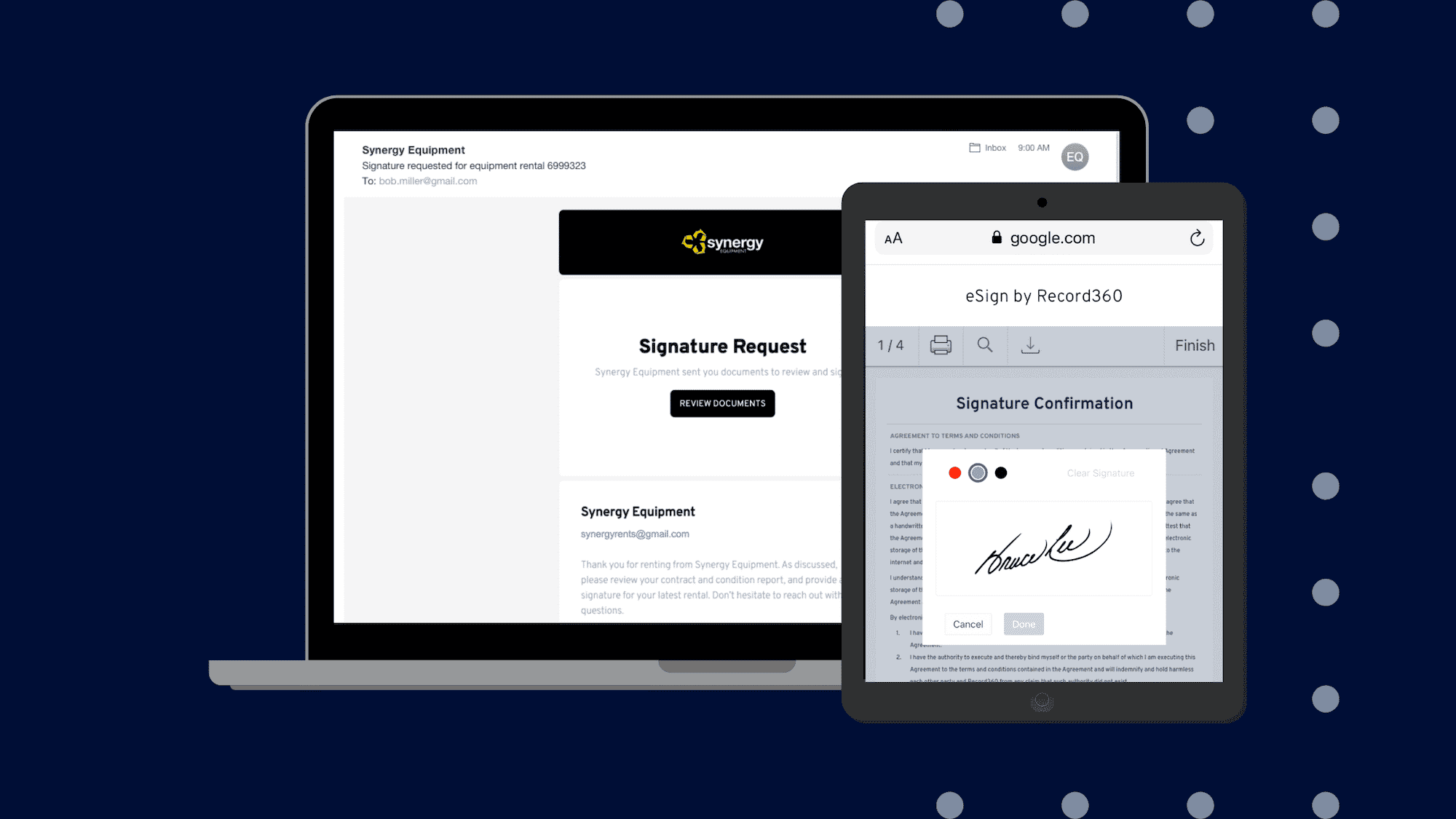
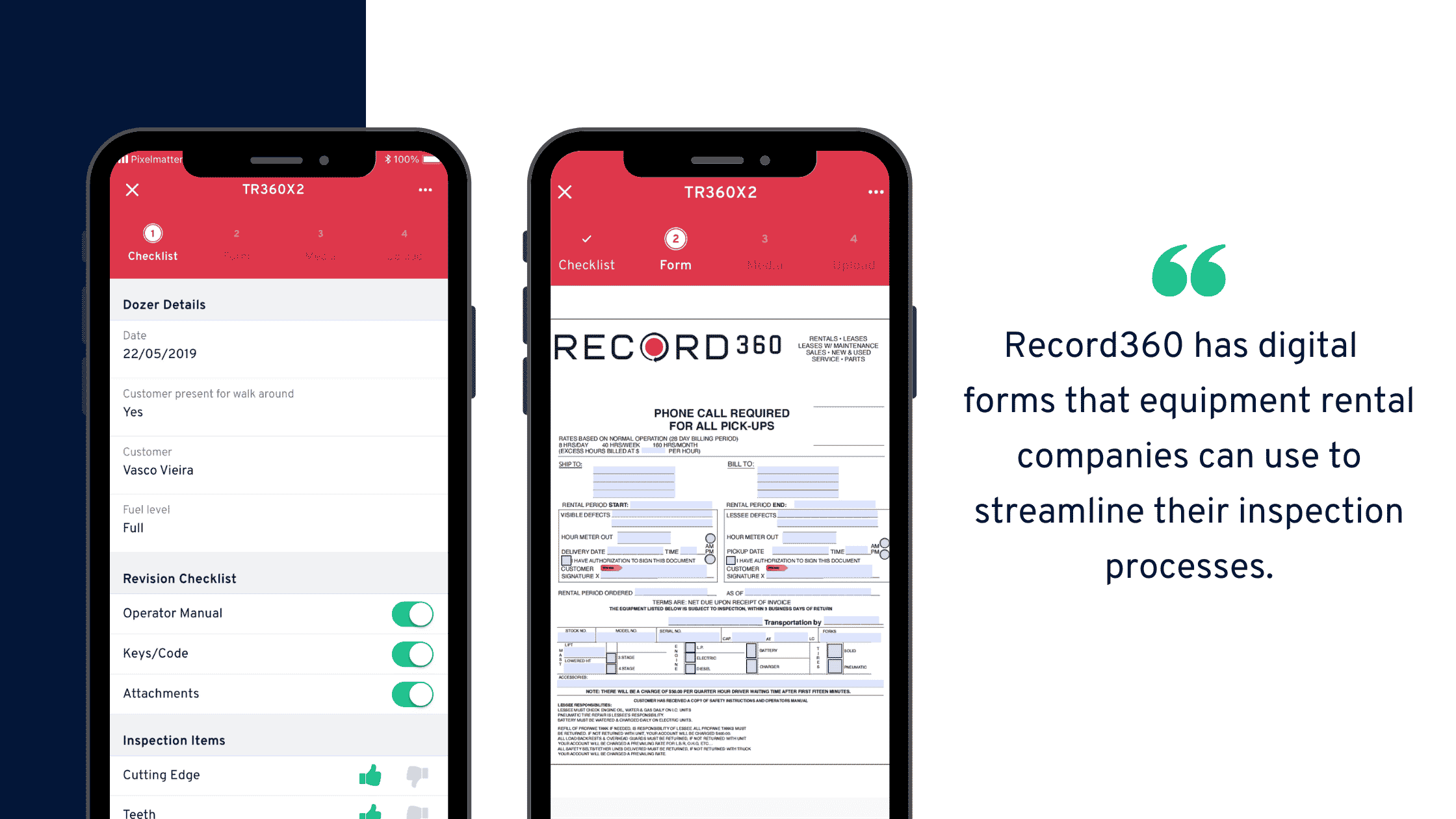
The app provides a maintenance inspection feature with a digital form and e-signature capture tool, allowing drivers to perform thorough truck maintenance checks seamlessly.

Besides helping drivers be accountable, conducting daily truck inspections keeps them safe since they constantly check if all the trucks and their parts are working properly.

An excellent inspection management software will help drivers and your staff gather, manage, and track all the necessary information to improve driver accountability and safety.

Reduce the maintenance cost of your fleet

If you find your trucks constantly breaking down and needing expensive repairs without warning, you might need to amp up your truck inspection process and vehicle maintenance.

Many breakdowns often stem from neglect and smaller, preventable problems had they been detected earlier.

An inspection management software with a truck maintenance checklist and a heavy equipment inspection form lets you detect and prevent minor problems from getting worse. This helps reduce your fleet’s overall maintenance costs.

Improve fleet efficiency 

Using a truck inspection form for your daily operations helps maximize your fleets’ efficiency in several ways.

1. Keep up with repairs

Conducting a daily truck inspection keeps you updated on your fleet’s current condition. It helps you and your team do everything efficiently, from scheduling repairs and maintenance during idle hours to pulling a truck out of rotation if it needs immediate attention.

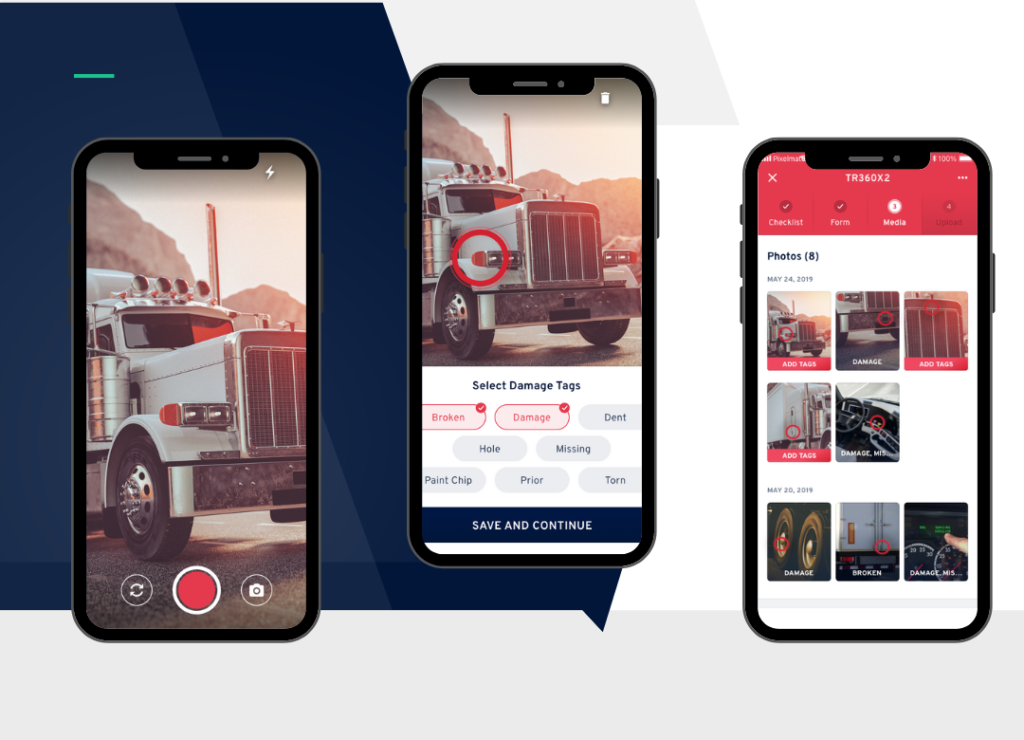
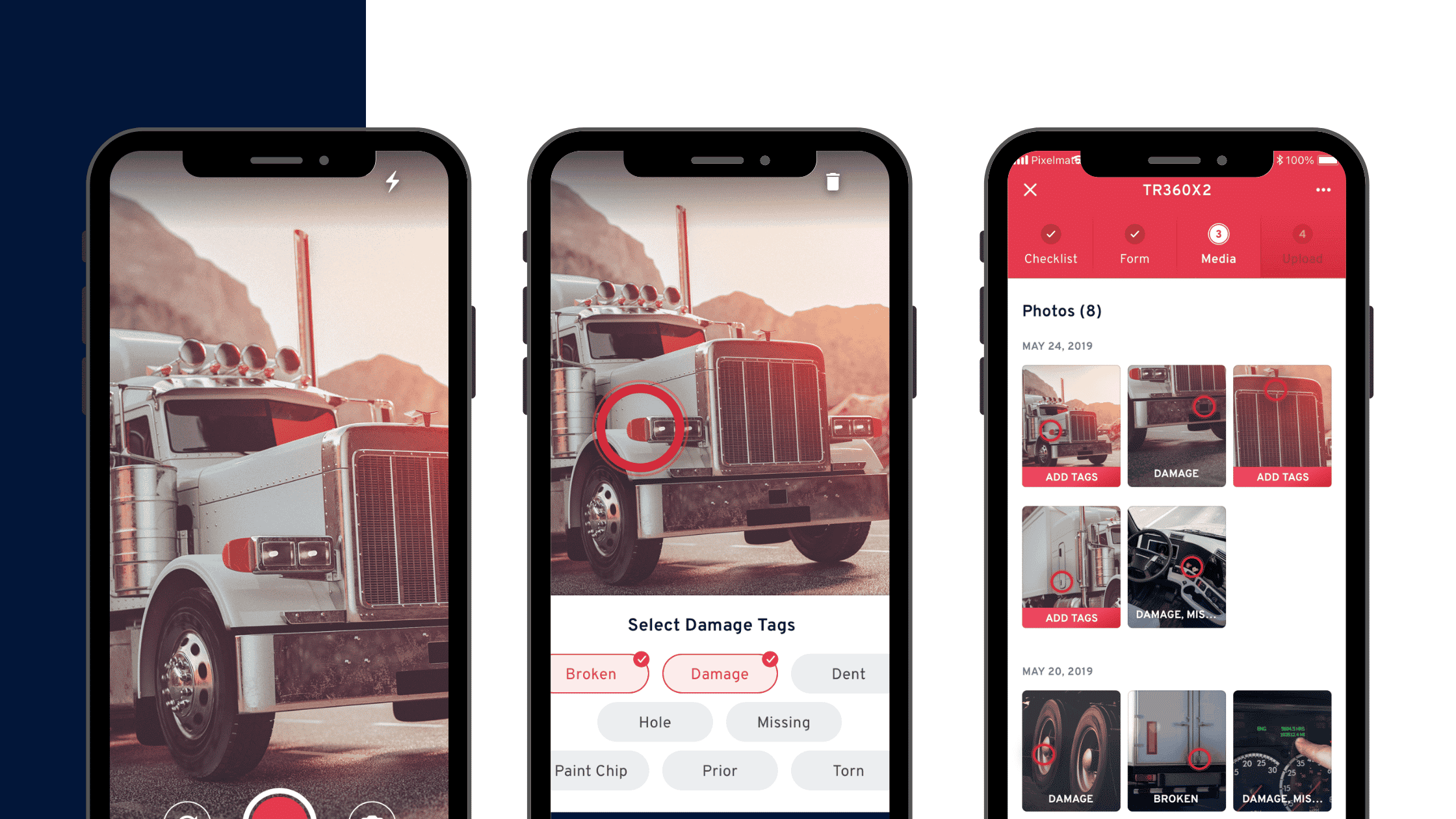
Record360 can help by allowing drivers to capture equipment damages or any issues through high-definition photos and videos. This lets managers track damages and schedule maintenance and repairs promptly. 

Blog-Commercial-truck-inspection-mistakes-you-need-to-avoid (2)

Record360’s web app also gathers and analyzes all your inspection information. This gives you valuable insights to track inspection history, activities, damages, and other relevant data to establish seamless equipment repair, maintenance, and scheduling systems. 

Essentially, inspection management software helps you stay on top of your fleet and ensure proper maintenance and repairs to help your rental business operate efficiently and avoid costly equipment breakdowns.

2. Encourages personnel to handle equipment better 

Requiring your staff and drivers to file a heavy equipment inspection form and go through a truck maintenance checklist before and after your trucks are released and returned can improve accountability.

The better your staff takes care of their equipment, the longer you can keep the trucks out of the repair shop. This helps with the overall efficiency of your operations in the long run.

Regular truck inspections also get your personnel and drivers in the habit of ensuring the trucks are safe to drive at all times. This is crucial since spotting easy-to-miss things, such as a faulty brake light, before hitting the road can significantly reduce potential accidents.

3. Avoid needlessly taking on too much work

While it’s tempting to take on all the work that comes your way, missing maintenance schedules to take on new jobs can cause your fleet more harm than good.

By pushing maintenance schedules back or not being aware of them, you could easily fail to spot issues that cause damage to your trucks and be forced to deal with expensive repairs.

Having updated truck inspection records helps you schedule routine maintenance more efficiently and lets you know when to say no to taking on more work.

Plan your fleet’s workload more efficiently and manage all your tasks and workflows through a reliable inspection management app.

You’ll get real-time data and updates of your fleet’s actual condition, so you don’t miss any issues while ensuring you manage your workload properly.

Key takeaways: Truck inspection forms can transform your business

Using a truck inspection form offers multiple advantages, from efficient fleet condition tracking and maintenance to seamless rental process workload management.

It also helps you spot and repair minor problems quickly before they get worse and cause significant damages.

The only downside to keeping such detailed truck inspection records is that it can become more challenging to stay organized the larger your fleet grows.

A truck inspection app with robust fleet management features can provide the solution.

With a dependable truck inspection app, you can adopt paperless methods, access a centralized system, and greatly reduce processing times—leading to overall business efficiency and growth.

Interested in learning more about Record360? Schedule a demonstration today.

The ultimate truck inspection guide

Any rental company with an established truck fleet management structure will advocate for regular truck inspections.

Sticking to a consistent inspection schedule keeps your trucks in tip-top shape and gives you a better picture of your fleet’s overall condition.

Moreover, you can detect and address any minor issues before they escalate into full-blown vehicle breakdowns and irreparable damages. This allows you to operate as close to maximum efficiency as possible.

If you’re looking for tried and tested strategies to make your truck inspections seamless and efficient, continue reading the tips below.

Inspection app features for truck rental companies

You can run your truck rental business more efficiently with a truck inspection app. You can cut down on costs, increase your productivity, and even improve the work experience of your employees.

These are some of the many features a truck inspection app brings that rental companies can benefit from:

1. Centralized inspection data

A huge benefit of using a truck inspection app is centralizing your truck inspection data.

Any important information you enter into the app—such as service history, client history, and even truck lease agreement details—is neatly organized and instantly ready for review.

You’ll have access to cloud-based services that let you store and retrieve essential data when and where you need it.

This feature is handy for any rental business that doesn’t want to waste time manually inputting, requesting, and sending data across multiple branches. You can also pull a truck’s entire service history during a commercial truck inspection.

2. View your fleet’s status easily

A good truck inspection app will also have a dashboard that gives you an overview of your fleet’s real-time status.

For example, Record360 lets you access a dashboard that displays your fleet condition in real-time. This helps you manage your truck rental business since you can monitor your trucks easily.

Blog-Top-11-equipment-inspection-software-features-3

At a glance, you can tell which trucks are available to rent under a truck lease agreement or are out of commission due to repairs, routine maintenance, or commercial truck inspections.

Access to all this information in real time allows you to make better decisions, helping you increase your utilization. What’s more, it makes your company more agile.

If it only takes seconds to determine the availability of your trucks, while it takes your competitors a couple of hours…your chances of dominating your competitors and winning new business drastically increase.

3. Perform truck inspections anywhere

Using a truck inspection app lets you perform a commercial truck inspection from anywhere and at any time.

With Record360, you can send contractors and drivers a direct link to the app, allowing them to perform a truck inspection on-premise or on-site.

Blog-Commercial-truck-inspection-mistakes-you-need-to-avoid-2

You can even access remote inspection data, allowing you to find out about damage from any location.

Because your truck drivers only need their mobile devices to perform the inspections, it makes their life easier. They don’t need to bring paper checklists to conduct their inspections.

Also, losing their inspection records becomes impossible because everything is stored in the cloud.

Must Read: User-friendly Truck Inspection Apps to Streamline Your Business

4. Document the condition of your trucks

Without centralized inspection data, it’s easy to miss customer damage, especially if your customers return the truck to a different rental branch.

This leaves you no choice but to foot the expensive repair bills your customers should pay.

Using a truck inspection app gives you instant access to photos of your truck taken before the client signed the truck lease agreement. This makes finding any new damage to your truck easy and has irrefutable proof to back up your claim.

Blog-Commercial-truck-inspection-mistakes-you-need-to-avoid

5. Obtain signatures instantly

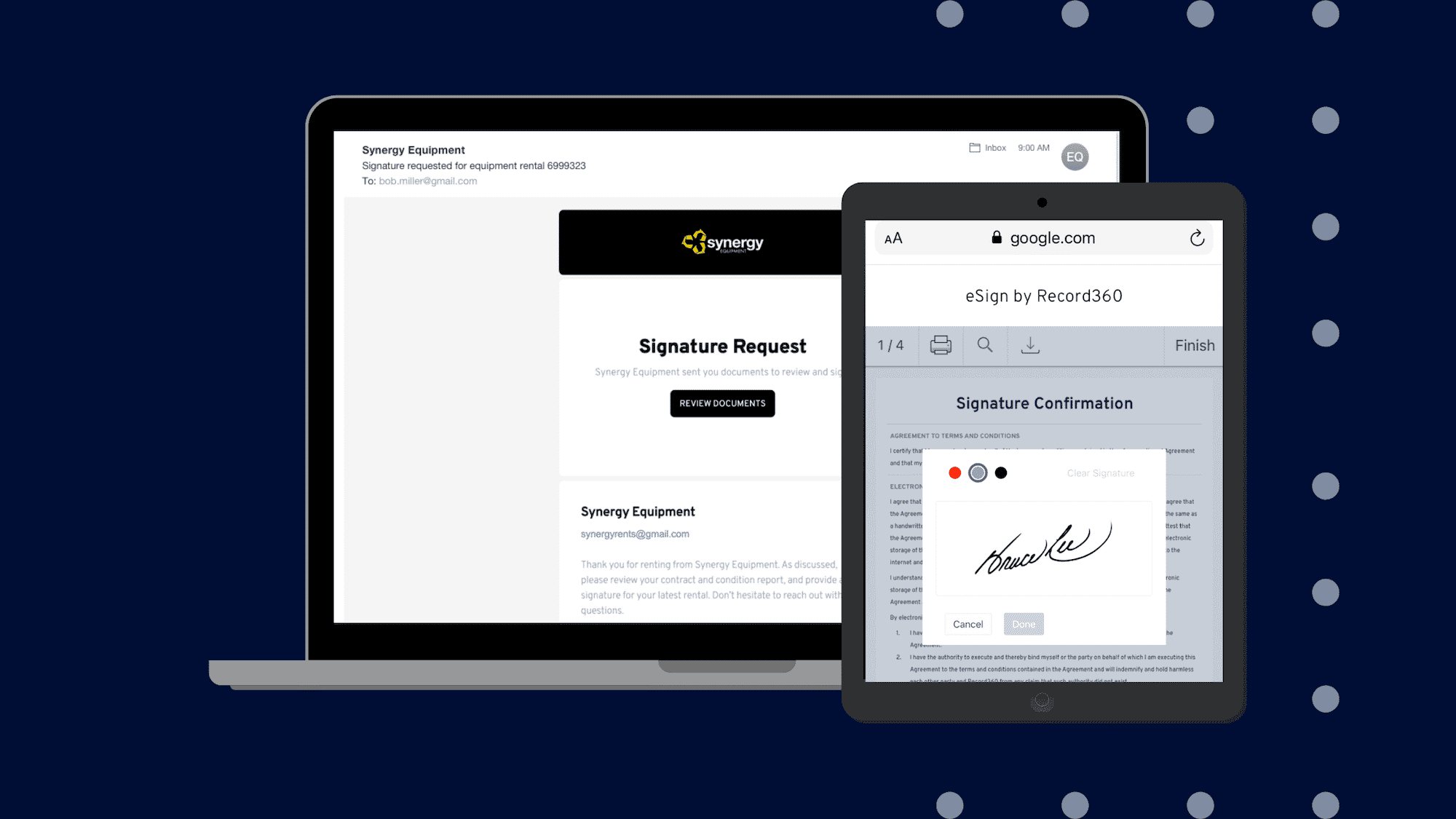
A truck inspection app saves you time and effort by letting you capture digital signatures easily. No more waiting around for your customers or team members to sign your inspection reports.

You can sign off on important documents and authorize crucial jobs without dealing with mountains of paperwork.

Must Read: The importance of electronic signatures for equipment inspections

Blog-Winning-rental-businesses-are-transforming-their-business-with-inspection-management-software

Because the people who are authorized to sign can enter their signature anywhere, the process of renting out your trucks is expedited.

6. Take photos and videos

Before renting out a truck, the last thing you want is to have a written narrative of its condition. After all…when your trucks are returned with an even bigger dent or damage, your written descriptions can’t save you.

For example, imagine your truck has a dent in the door. You describe the dent in a written report, then rent the truck out to your customer. When your truck comes back, the dent has tripled in size.

How can you claim compensation from your customer when you only have a written report describing the “dent”? Your customer can easily claim the dent was already there when your truck was sent to them. You can’t prove that the dent became bigger.

With written narratives, you’ll end up with unwinnable damage disputes. You’ll end up forking out thousands for repairs that your customers should be paying.

That’s why truck inspection apps must have photo and video capture features.

When you take a video of your truck before renting it out, you obtain an accurate visual of your truck’s condition. This becomes your irrefutable proof that damage was caused by your customer.

Must Read: Why equipment videos and photos are important for equipment inspections

Preparing for a commercial truck inspection

To ensure your commercial motor vehicles (CMVs) are always in the best condition, you must be proactive with your maintenance.

Your drivers must learn the hazards of driving a damaged CMV and how to detect, report, and repair minor problems before they become more significant.

A great way to do this is with a simple, walk-around inspection to check critical vehicle parts, elements, and functions before and after every trip.

1. Test the lights

Properly functioning lights are crucial to help truck drivers see the road clearly and avoid any accidents. Turn on the engine and switch each light on systematically.

Check the headlights, taillights, brake lights, high and low beams, turn signals, and any other important lights to ensure they all function properly.

2. Check the tires

Assess each tire for wear and tear. Look out for loose tires or any form of damage. Use a tire pressure gauge to ensure the air pressure is at recommended levels.

Though tires rarely blow out, worn and under-inflated tires can make a truck challenging to control. In worst-case scenarios, the truck may even become undrivable.

Be familiar with the rules and regulations concerning mudflaps in any of the states along your route. Some states provide specific requirements for mud flaps or splash guards to keep spray or debris from hitting the windshields of any vehicles following your truck.

It’s also worth pointing out that driving trucks with under-inflated tires can consume more fuel. So if you’re seeing an unreasonable increase in your fuel consumption, be sure to check your tires.

3. Look for cracks

Regularly check for hairline cracks and “stars” potentially caused by flying gravel or other debris. Any cracks on windows or windshields can worsen quickly if they aren’t addressed immediately. 

4. Check your breaks

Inspect your air brake system to ensure you have no air leaks or air pressure loss.

5. Inspect your wipers

Make sure your blades aren’t missing or broken. When used, your wipers should give your drivers a clear vision. Damages or cracks can prevent this.

6. Check your truck’s security features

Examine your truck’s security features to make sure they’re functioning correctly. Check your seatbelts, doors, wiring, breaks, etc.

Must Read: Mastering DOT Annual Inspections: A Comprehensive Guide to Navigating the Checklist and Form

Tips for more accessible and more efficient truck fleet management

Consider the tips below to help make your truck fleet management less stressful and more efficient.

1. Switch to using a digital truck inspection form

Instead of manually filling out paper-based truck inspection forms and digging through records, your team members can easily pull up any digital forms with a mobile device linked to the truck inspection app.

Blog-5-benefits-of-using-a-digital-equipment-inspection-form

By using digital truck inspection forms, your team members can easily access relevant documentation when necessary.

2. Stay up-to-date with the condition of your fleet

Knowing your fleet’s condition is important to ensure you run your rental business at maximum efficiency.

Staying updated with information such as which units are due for routine maintenance, out for repairs, or scheduled for truck inspection helps you create a more efficient working schedule for your drivers.

3. Keep everyone in the loop

Having quick access to critical information reduces the chances of errors due to miscommunication. That’s why keeping your team in the loop is a great way to keep your rental business running smoothly.

A dependable truck inspection app that lets you centralize your data allows seamless access to and sharing for your team members. 

4. Invest in training your drivers

Drivers with poor driving habits can cause problems for your truck rental company. Your trucks will have a shorter service life, and your truck repairs and maintenance costs can skyrocket.

When you factor in the accidents and potential legal problems your delinquent drivers can cause, it becomes apparent why you must invest in training.

If your drivers avoid hard braking and making sharp turns, among other poor driving habits, you can get more mileage from your trucks since their service life is prolonged.

5. Put a premium on hiring the right people

Whether you’re hiring a driver, accountant, or rental manager, you need to be cautious about who you hire.

Take the time to do ample background checks and to dig in during interviews.

You can have the best processes and policies in place to run your truck rental company, but if you hire people with character issues, you’ll have many problems.

Truck inspection guide: Key takeaways

Following a regular truck inspection schedule is a great way to keep your fleet in good condition and your rental business running as efficiently as possible.

With a regular truck inspection schedule, you can detect and address minor issues before they escalate into bigger, more costly problems.

While it’s easy to keep track of a small fleet’s schedule, things quickly become more complicated the larger your fleet gets.

To address truck fleet management’s common issues and hiccups, integrate a truck inspection app into your operations to streamline your workflows.

Schedule a demonstration today to learn how Record360 can optimize your truck rental company.

5 benefits of a truck inspection app

Using a truck inspection app eliminates the tedious and time-consuming tasks of manual, paper-based processes.

Not only do manual processes make your truck inspection process inefficient, they also cause you to lose time and money. You need to go the paperless route.

A reliable truck inspection app can speed up your inspection process and save you and your staff tons of precious work hours and resources. 


This guide covers five benefits of using a truck inspection app and how it can improve conducting your vehicle assessments. 

1. Speed up your inspection process

The traditional way of conducting a truck inspection is often a headache with all the paperwork you must fill out, file, and organize.

It can also be a long and tedious process that wastes time and resources, particularly if you have a large fleet with over 50 trucks in and out daily. 

A truck inspection app provides a streamlined solution, allowing you to conduct paperless, electronic assessments seamlessly. 

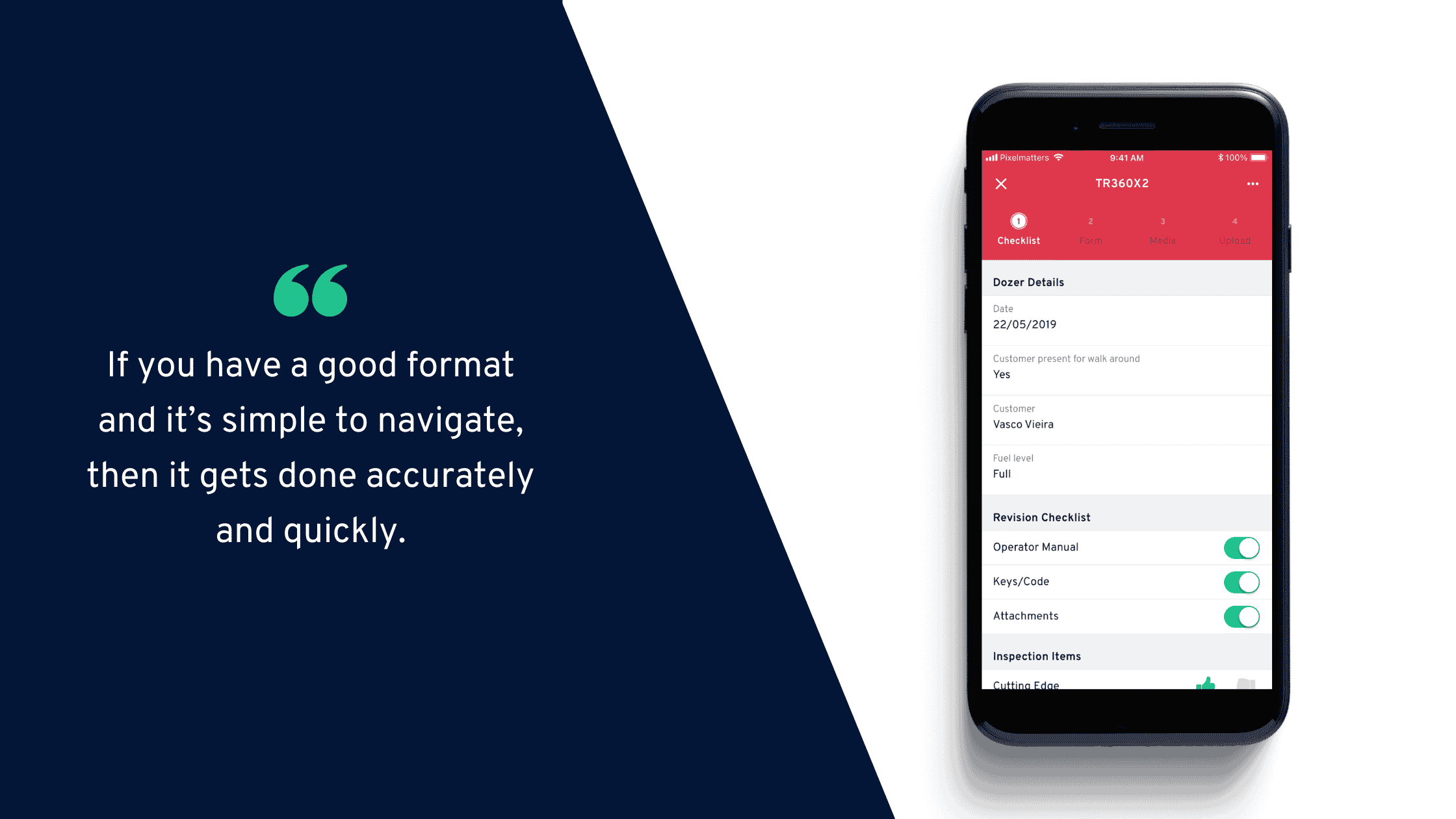
The Record360 app provides an easy digital checklist and truck inspection form right from your mobile device. This cuts down significantly on the time and effort it usually takes to complete, send, and get signatures on paper-based inspections.

Must Read: Electronic DVIR for Truck Inspections: Improving Safety and Efficiency

Blog-5-benefits-of-using-a-digital-equipment-inspection-form (1)

The app lets you record all your data in a standard format. You can also modify your checklist and forms without the hassle of printing out tons of paper.

After filling out the digital commercial truck inspection forms, the app lets users send them directly to managers through email with a few taps. 

A dependable app can also secure your data stored on the cloud, giving you the peace of mind of knowing your inspection information is safe and only accessible to authorized users. 

2. Record vehicle condition anywhere

One of the advantages of using a truck inspection app is it lets users perform vehicle assessments, whether on-premise or on-site. 

It simplifies your commercial truck inspection process and conveniently allows anyone from your team, contractors, and even customers to assess your vehicles and capture your asset’s real condition anywhere and anytime. 

For instance, Record360 allows you to send drivers and contractors a direct link to Record360, allowing them to perform inspections wherever your trucks are deployed. This gives you instant access to remote inspection information, helping you detect damages promptly. 

You can set alerts to trigger when damages are detected during truck inspections, helping you act on damages in real time. 

With a truck inspection app, you can easily begin inspections from your desktop and send them to your team to complete in the field using their mobile devices.   

You can take high-definition photos and videos to capture your truck’s damages and actual condition and, in turn, make your inspections simple and easy. 

Must Read: Trucking Inspection Checklist: Importance, Components, and Benefits

3. Streamline getting signatures 

Getting managers and customers to sign off on paper inspection reports can be a long and tedious back-and-forth process. 

Save time and energy by using Record360 to obtain electronic signatures from the app. 

Instead of a paper truck inspection form, you can capture electronic signatures on your digital forms and auto-email them to customers, speeding up the process. 

Must Read: The importance of electronic signatures for equipment inspections

Copy-of-Blog-Winning-rental-businesses-are-transforming-their-business-with-inspection-management-software (1)

Once signed, you can store the reports in a secure dashboard for easy access and efficient record keeping. This also helps optimize your truck fleet management processes.  

4. Centralize your inspection data

Paper-based truck inspection records can be challenging to accomplish promptly and accurately, but they can also be a nightmare to file, keep track of, and access. 

A truck inspection app allows you to upload and store all vehicle assessment records in one central location. This provides quick and easy access, streamlining your workflows and truck fleet management tasks. 

With consolidated commercial truck inspection records, you can pull record histories, identify trends, and analyze your data. 

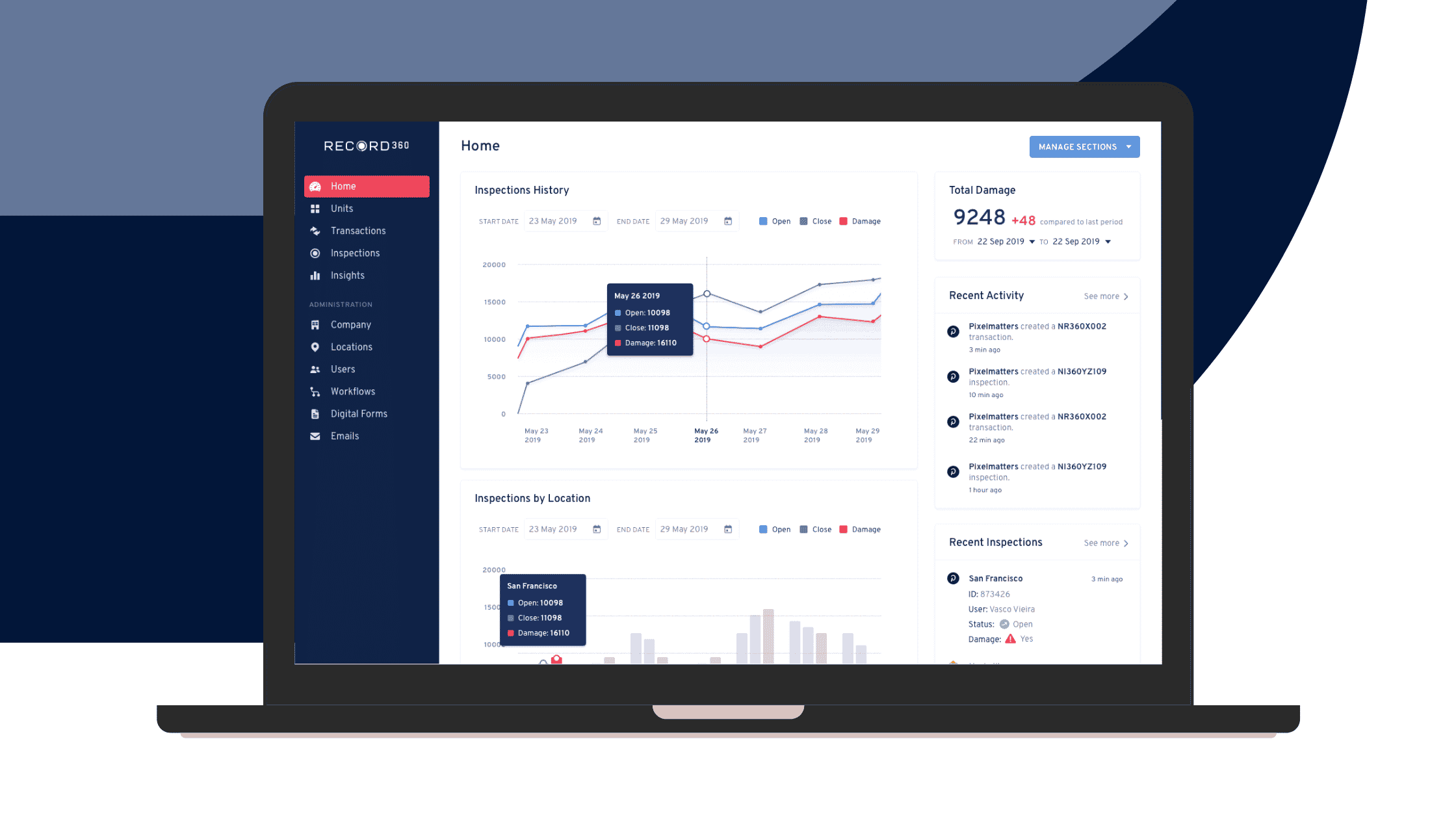
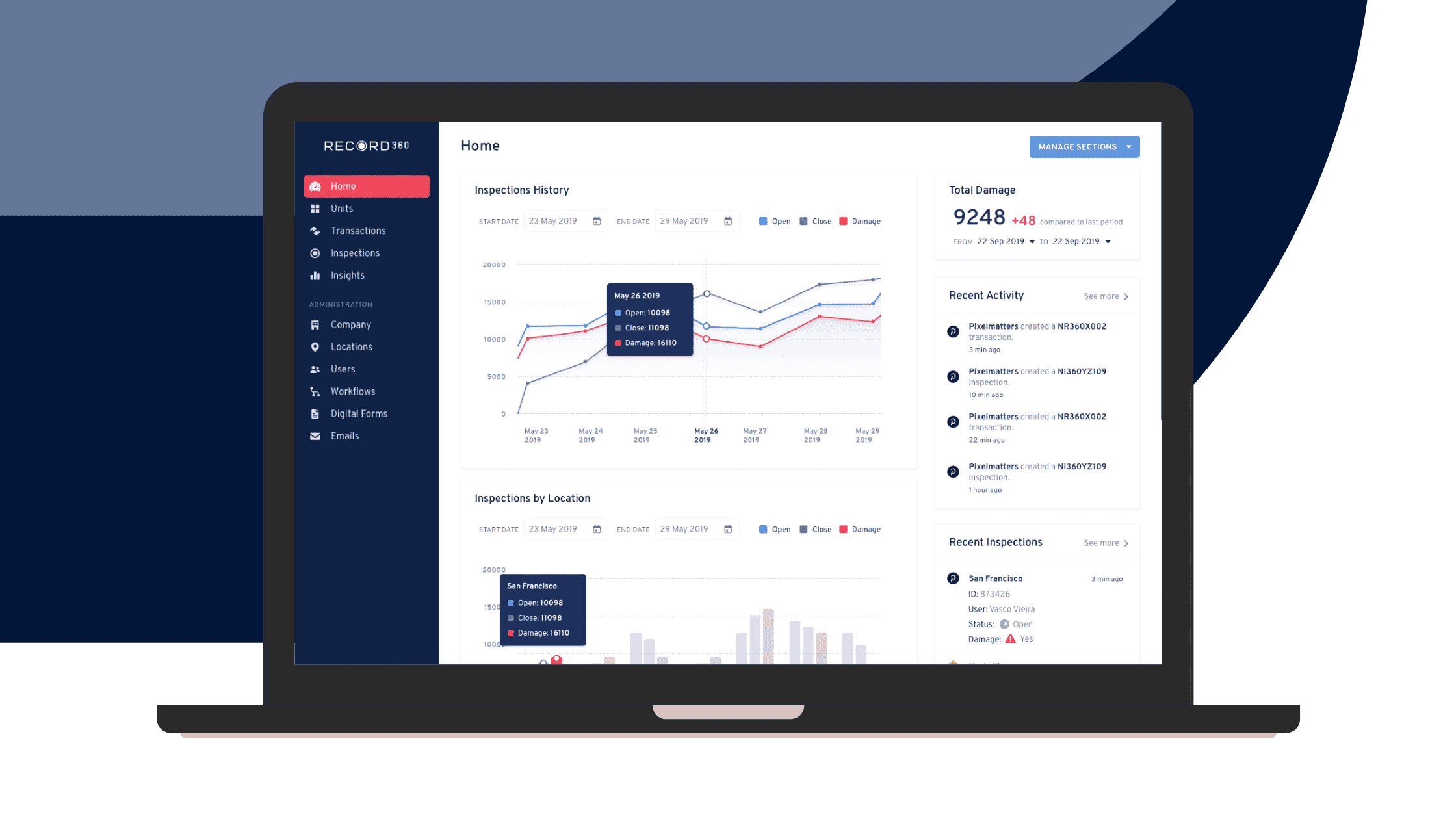
For instance, the Record360 web app offers a comprehensive dashboard to help you stay on top and gain insights from your truck inspection information. 

You’ll get instant views of your inspection history, the number of total damages, recent activities and inspections, and other valuable data. This can help you make better decisions and identify areas to reevaluate and improve. 

Blog-Top-11-equipment-inspection-software-features-3 (1)

You’ll get real-time information with all your inspection records and other data on your transactions and units. You’ll have full access to everything you need to understand your fleet’s condition through damage analytics, past inspections, and employee usage (among others). 

As such, a truck inspection app that centralizes your data helps managers stay on top of your inspections and related processes and keeps everyone in the loop. 

5. Establish efficient inspection workflows

Conduct seamless truck inspections to streamline your workflows so you spend more time and resources on renting and, in turn, increasing your revenue. 

A truck inspection app frees you and your team from time-consuming paper-based processes, allowing you to perform vehicle assessments efficiently. 

Apps with custom-built truck workflows, for instance, simplify and streamline your inspection process. 

You can complete an entire truck inspection in minutes, whether for an incident report, service inspection, appraisal, lease inspection, prep for sale, or lease inspection. 

With the app, you can cover more ground with less effort than manual, paper-based methods, optimizing your truck inspections.

Efficient inspections and workflows also mean you can spot truck damages and act on them quickly. This helps you avoid potential issues, eliminate costly damage disputes, and protect your assets and business. 

Must Read: Streamlining Truck Inspection Checklists with Record360

Start leveraging the game-changing advantages of a truck inspection app

Preserve your fleet’s quality and protect it from costly damages by streamlining your truck inspection process.  

Take away the headaches that come with traditional methods. 

Equip your team with a dependable truck inspection app that provides easy-to-use and access digital forms, robust damage and data recording features, a central data hub, and in-app signature capturing (among others). 

If you want to leverage these powerful features to optimize your truck inspections, schedule a demonstration with Record360 today.